
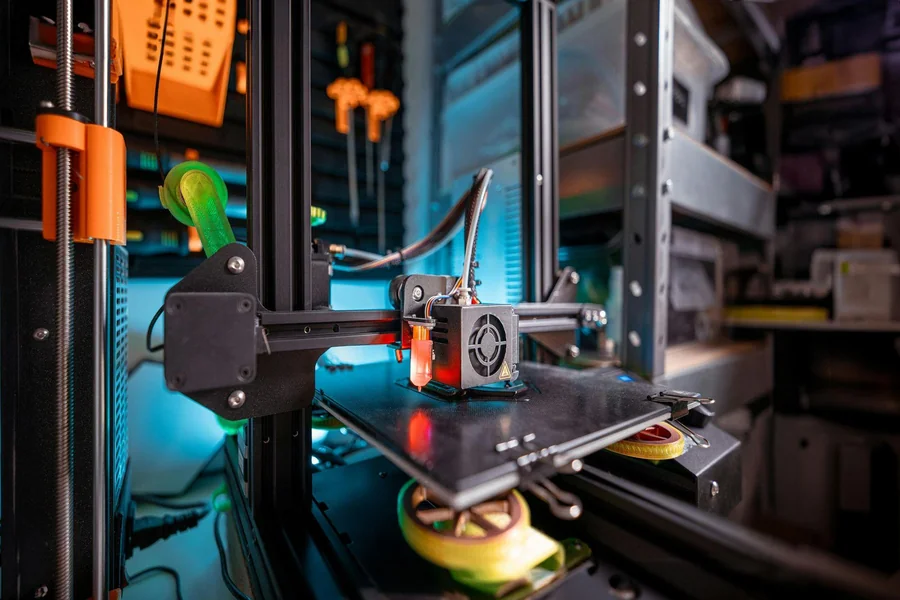
3D printers are no longer isolated machines humming in garages. Today, they sit at the heart of smart factories, medical labs, and design studios, all plugged into the internet. That connectivity is powerful. It is also a problem.
When a 3D printer joins an IoT network, it becomes an endpoint — and every endpoint is a potential doorway for attackers. A 2023 report found that manufacturing devices, including connected printers, ranked among the top five most vulnerable IoT categories. The threat is real, and it is growing.
What Makes IoT-Connected 3D Printers Vulnerable
Weak Default Settings
Most 3D printers ship with default credentials and open ports. Manufacturers optimize for ease of setup, not security. Users rarely change the defaults. That combination creates an open invitation.
Attackers can intercept print jobs, steal design files, or use the printer as a foothold into a broader corporate network. Some attacks even corrupt firmware — silently, without leaving any visible trace.
Unencrypted Data in Transit
Print data travels from a computer to the printer over the network. Without encryption, that data is readable by anyone watching the traffic. Industrial blueprints, medical prosthetics models, proprietary prototypes — all potentially exposed in plain text.
VPNs, Cybersecurity, and Accessing the Open Internet
A Tool That Does More Than One Thing
A VPN — Virtual Private Network — creates an encrypted tunnel between your device and the internet. In cybersecurity, this matters because it hides your traffic from snoopers, whether they are on your local network or further upstream. But VPNs serve another purpose too: they allow free access to foreign web resources that might otherwise be restricted by geography or local network policies.
For engineers and designers who rely on global repositories, international vendor portals, or firmware update servers hosted abroad, this is a great deal. Modern VPN apps make this easy to configure on any device. A high-quality VPN for PC can be installed in minutes, protecting both your browsing and your local network traffic simultaneously. With a reliable VPN for Windows, you can ensure that all applications on your computer use secure communication channels. Every application automatically benefits.
How a VPN Directly Protects Your 3D Printer Setup
Encrypting the Data Channel
When you route print jobs through a VPN, the data leaving your computer is encrypted before it ever hits the network. Even if someone intercepts the packets, they see noise. The design file stays yours.
This is especially critical in shared environments — offices, universities, makerspaces — where multiple users share the same Wi-Fi.
Hiding the Printer From the Open Internet
Many IoT 3D printers get assigned a public IP address, making them discoverable by scanner tools like Shodan. In 2020, researchers found over 3,700 3D printers exposed directly to the internet with no authentication. A VPN can mask that exposure by routing traffic through a private gateway, keeping the printer invisible to outside scans.
Network Segmentation and VPN Tunnels
Keeping Printers in Their Own Lane
Good network design puts 3D printers on a separate subnet from the rest of the office. A VPN reinforces this by ensuring that only authenticated, encrypted connections can reach that subnet. Unauthorized devices simply cannot get in.
This segmentation strategy is increasingly standard in industrial IoT deployments. According to a 2024 IoT Analytics report, 61% of enterprises with mature IoT security programs used some form of tunneling or segmentation to isolate device traffic.
Remote Access Without Compromise
Monitoring Prints From Anywhere — Safely
Remote print monitoring is one of the biggest benefits of IoT-connected 3D printers. You can check progress, pause a job, or catch a failed print from across the city. Without a VPN, this remote access often relies on exposed web interfaces or third-party cloud services with unclear data handling.
A VPN lets you connect directly to your printer’s local network over an encrypted channel. No exposed port. No third party in the middle. Just you and your machine, with a private, authenticated tunnel between them.
Practical Steps to Implement VPN Security for IoT Printers
Start Simple, Then Scale
You do not need an enterprise firewall to get started. A VPN-enabled router covers every device on your network — including your 3D printer — without touching the printer’s own settings. For individual workstations, a VPN client handles the job at the software level.
Change default credentials first. Then add the VPN layer. Then review what ports your printer exposes and close the ones you do not need. Three steps, significant improvement.
Keep Everything Updated
Firmware updates for 3D printers often patch security vulnerabilities. A VPN protects your traffic, but it cannot fix a known software flaw inside the printer itself. Both layers matter. Neither replaces the other.
The Bottom Line
IoT-connected 3D printers bring enormous efficiency gains. They also bring real security risks that most users underestimate. A VPN addresses the most common attack vectors: unencrypted data in transit, exposed network interfaces, and unauthorized remote access.
The statistics are sobering, the fixes are accessible, and the cost of inaction — stolen designs, compromised networks, corrupted production runs — is far higher than the effort required to act. Secure the connection. Protect the machine. Keep building.