
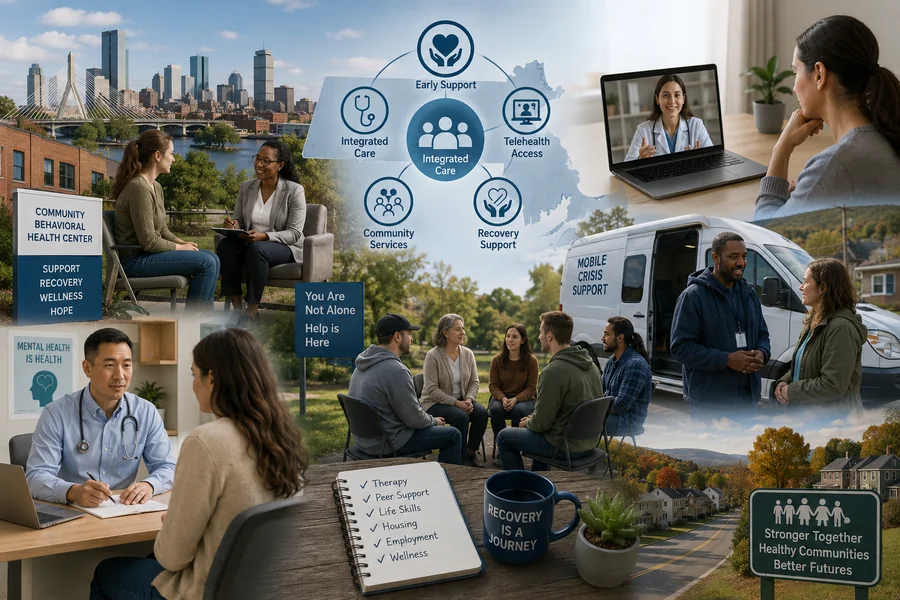
Over the past several years, behavioral health care in Massachusetts and nearby regions has been undergoing a noticeable shift. What once felt like a system built primarily around crisis response is gradually evolving into something more continuous, preventive, and community-oriented. This transformation is not happening evenly or quickly, but the direction is clear: care is becoming more accessible, more integrated, and more aware of the complex realities people face in everyday life.
At the same time, long-standing challenges remain. Access gaps, workforce shortages, and uneven regional resources continue to shape how and when people receive help. The result is a landscape that is improving in some areas while still struggling in others.
Understanding this evolving system helps highlight both the progress being made and the work still ahead.
From crisis-driven care to ongoing support
For many years, behavioral health services in Massachusetts were largely associated with emergency interventions. Hospitalizations, urgent psychiatric care, and short-term stabilization were often the entry points for people seeking help. While these services are still essential, they are no longer viewed as the beginning and end of care.
Today, there is a stronger push toward earlier intervention and long-term support. The idea is simple but significant: addressing mental health and substance use concerns before they escalate can lead to better outcomes and reduced strain on emergency systems.
This shift reflects a broader understanding that behavioral health conditions are not isolated events but ongoing experiences influenced by stress, environment, trauma, and access to support.
Integration of mental health and general healthcare
One of the most important developments in the region has been the growing integration of behavioral health into primary care settings. Instead of treating mental health separately, more providers are working to combine physical and psychological care under one system.
This integration makes it easier for individuals to receive timely support. A routine medical visit may now include mental health screening, and primary care providers are increasingly collaborating with behavioral health specialists.
However, this model is still developing. In many areas, coordination between different providers remains inconsistent, especially where resources are limited. Even so, the direction is encouraging, as it helps reduce fragmentation in care.
Expansion of community-based services
Another major shift is the increased emphasis on community-based behavioral health services. Rather than relying heavily on inpatient or institutional settings, more support is being delivered through local programs and outpatient care.
These services often include counseling, peer support, mobile crisis response teams, and structured outpatient programs. The goal is to meet individuals in familiar environments and reduce barriers such as transportation, stigma, and cost.
This approach has become especially important in discussions around recovery from substance use. In many cases, long-term progress depends not only on initial treatment but also on continued community support. Programs often associated with Drug rehab in Massachusetts highlight how ongoing care and community connection play a role beyond early stabilization.
Telehealth as a permanent part of care
The rise of telehealth has significantly reshaped behavioral health services. What began as a temporary solution has now become a lasting part of the system.
Virtual therapy sessions, remote psychiatric consultations, and digital mental health tools have expanded access for many individuals who might otherwise face logistical barriers. This has been particularly helpful in areas where providers are limited or travel distances are long.
Telehealth has also allowed for more flexibility in scheduling, which can be important for individuals balancing work, family, and treatment needs.
Still, it is not a perfect solution. Some people benefit more from in-person interaction, especially when beginning treatment or during periods of acute distress. Digital access also remains uneven across different populations.
Changing attitudes and reduced stigma
One of the quieter but most meaningful changes in recent years has been the gradual reduction of stigma surrounding behavioral health conditions. More open conversations in schools, workplaces, and communities have helped normalize seeking help.
Mental health challenges and substance use disorders are increasingly understood as health conditions rather than personal failings. This shift has encouraged earlier engagement with services and a greater willingness to discuss difficult experiences.
That said, stigma has not disappeared. It still influences how some people perceive treatment, and it can affect whether individuals feel comfortable reaching out for help. But the overall trend is moving toward greater acceptance.
Workforce shortages and system strain
Despite improvements in access and awareness, one of the most pressing issues in behavioral health care remains the shortage of trained professionals. Therapists, counselors, psychiatrists, and support staff are in high demand across Massachusetts and surrounding areas.
This shortage affects nearly every part of the system. Wait times can be long, caseloads can be heavy, and some individuals struggle to find appropriate care at all.
Efforts to address this include expanded training programs, incentives for working in underserved areas, and increased use of peer support roles. However, these solutions take time to fully impact the system.
Uneven access across regions
Access to behavioral health services can vary significantly depending on location. Urban areas generally offer more providers and a wider range of services, while rural and some suburban communities may have fewer options.
This imbalance can lead to delays in care or reliance on emergency services when preventative or ongoing support would be more appropriate. Transportation challenges and limited local infrastructure can further complicate access.
As a result, regional collaboration and mobile or remote services are becoming more important in bridging these gaps.
A broader understanding of recovery
Recovery is increasingly being viewed as a long-term, individualized process rather than a fixed destination. This perspective has influenced how services are structured and delivered.
Instead of focusing solely on immediate stabilization, there is more attention on life skills, housing stability, employment support, and social connection. These factors are now widely recognized as essential components of sustained recovery.
Within this broader framework, treatment pathways such as those connected to Drug rehab in Massachusetts are often seen as one part of a longer continuum of care rather than a standalone solution.
Looking ahead
The behavioral health system in Massachusetts and surrounding regions is clearly evolving. The shift toward integration, community-based care, and digital access reflects a growing recognition that support must be flexible and ongoing.
At the same time, persistent challenges such as workforce shortages and unequal access highlight the need for continued investment and system-wide coordination.
Future improvements will likely depend on how effectively these gaps are addressed while maintaining momentum in areas that are already improving.
Conclusion
The changing landscape of behavioral health support services in Massachusetts and surrounding areas reflects both progress and ongoing complexity. Care is becoming more accessible and more connected, but it is not yet consistent for everyone.
What is emerging is a system that increasingly recognizes behavioral health as part of overall health, shaped by daily life rather than isolated events. While the path forward still has obstacles, the direction points toward a more integrated and responsive approach to care that better reflects real human needs.