
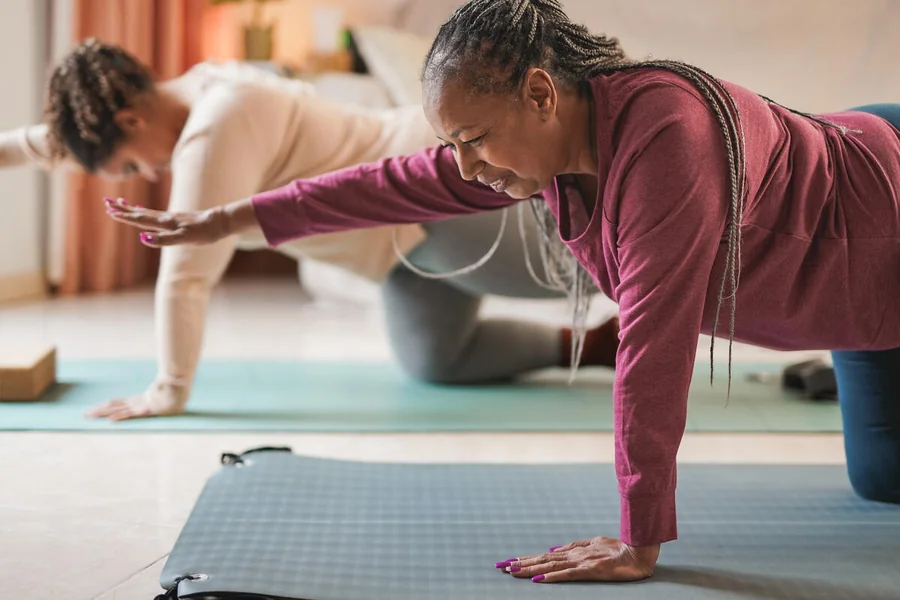
Hey there! And in case you have just recently turned 3-0 (or even older than that) and you are contemplating getting on the yoga mat on the first occasion, we would like to give you a huge virtual high-five.
We are yoga teachers who have witnessed students begin at age 8 and age 80. However, it is something really special—and, to be perfectly honest, somewhat daunting—to begin yoga after 30. This is the decade where we tend to begin feeling those first little “niggles” in our lower back or begin to realize that we are no longer lasting so fast after a stressful week.
In case you are feeling that you are too stiff, too busy, or too late for the party, we would like to stop you right there. Yoga does not touch your toes; it is what you study on the way down. In this blog, we’re going to discuss why 30 is indeed the ideal age to start unless you feel otherwise, how to avoid injury, and the easy steps you can take to build a practice that will stick.
The 30s will be the Golden Age of Yoga
Our bodies are frequently treated in our 20s like the high-performance rental car. We push them to the edge, cut corners, and expect them to run like clockwork. By the age of 30, we normally have come to the realization that our engine requires a little more service.
The yoga benefits of adults above 30 far exceed the issue of flexibility. This is why this is your new best friend:
- Stress Management: In between your career ascendancy, mortgages, and possibly raising your kids, the stress levels in your 30s may be off the scale. Yoga reduces the levels of cortisol and makes you find a reset button.
- Functional Strength: It begins to lose muscle mass slowly after 30. Yoga takes advantage of your personal weight to develop lean, functional muscle to support your joints.
- Postural Correction: The vast majority of us sit at laptops/phones hunched over. Yoga undoes the “tech neck,” and the chest and hips open.
- Better Sleep: A routine practice balances your nervous system, making it easier to fall asleep and, more importantly, to stay asleep.
Breaking the Myth: I am not flexible
Before we proceed any further it would be well to set the record straight. Saying you’re too stiff to do yoga is like saying you’re too dirty to take a bath. The outcome of yoga is flexibility and not the precondition.
Your ambition is not to be a human pretzel when you start yoga in your 30s. It’s about mobility. We want you to move your joints through all the possible movements and be able to pick up your groceries and your dog and sit on the floor and be able to do so for many years to come.
How to Start: Selecting the appropriate style.
The entry into a yoga studio may seem to be entering into a new world. Sanskrit words are flying round; there is some strange scent of incense and a dozen different names of classes. Whether you’re learning through a local studio, online classes, or an immersive program like those offered by Maa Shakti Yog, choosing a teacher who emphasizes alignment and mindful progression will make all the difference. As a beginner over 30, you can start with one of the three:
- Hatha Yoga: The most traditional style of yoga, also called the slow and steady style. You will stay in poses long enough to learn the position and get a great stretch without having to hurry.
- Vinyasa (Flow): You want to move and sweat; Vinyasa combines movement with breath. It is also excellent in terms of cardiovascular health, but be sure to find a Level 1 or Level Beginner class.
- Yin or Restorative: These are the nap-near styles. Supported poses are held during a few minutes. It is amazing to release deep tissue and enter the state of mind.
Pro Tip: There is nothing to be afraid of when trying 3 or 4 different teachers. Each teacher has a certain vibe, and the key to staying motivated is to find a teacher that you get along with.
As your confidence grows, you may find yourself wanting to explore yoga beyond regular classes. Many practitioners eventually choose a 300 hour yoga teacher training in Rishikesh, not only to become teachers but also to deepen their understanding of yoga philosophy, anatomy, breathwork, and personal practice.
The Gear Guide (Keep it Simple) for the Beginner
Even without spending money on a 100 designer outfit, one can do yoga. Actually, you only have to have the following:
- A Decent Mat: When you are over 30, your knees will be pleased with a mat with some cushion (at least 5mm thick).
- Cozy Clothing: Wear something that will not fall when you bend down. Believe me, you will not be glad to be taking off your shirt every five minutes.
- Two Yoga Blocks: These are game changers. They pull the floor to you, and then you can hold good form even when the hamstring is tight.
Your 30-Something Joints: Safety First
Being honest, we do not get healed as quickly as during our 21-year-old years. To maintain your practice sustainable and injury-free, remember about these “Golden Rules,” which will help you to maintain your practice:
1. Respect the “edge.”
In yoga we discuss the edge. This is where you experience that incredibly deep stretch, yet no pain. Whenever you feel sharp, shooting, or electric feelings, withdraw at once. Yoga ought to be good hurt, that good pain of muscles that are working, but not real pain.
2. Concentrate on the Foundation.
The majority of yoga injuries occur due to the fact that individuals attempt to go too deep too fast. Pay attention to your hands and feet. Assuming that your foundation is strong, your joints will be safeguarded.
3. Breathe out of your nose.
Whether you are panting or holding your breath, then you have gone too far. Your breath is your personal compass; when it is calm and even, then your body is in a comfortable zone.
Simple 10-minute morning routine.
Unable to get to a 60-minute class? No problem. Coherence is better than intensity in any case. The following four poses are to be taken in the mornings and help to wake up our bodies:
- Cat-Cow: Get on all fours. Breathe in as you bend your back and look up (Cow); inhale when you bend your back and look up (Cow). This “oils” the vertebrae of your spine.
- Downward Facing Dog: This is the final stretch of all the areas. It strengthens the upper body muscles and stretches the hamstrings. And there is nothing to worry about whether your heels are touching the floor—mine did not do it for several years!
- Low Lunge: Lunge forward with one foot between your hands and drop your back knee. This stretches the hip flexors that become extremely tight when sitting at a desk.
- Child’s Pose: The ultimate “reset.” Kneel on the floor, bring your big toes together, sit on your heels, and then fold forward. It’s an instant stress-reliever.
The Mental Game: Yoga is Not a Competition
In our 30s, we tend to be extremely goal-oriented. We wish to crush our exercise routines and level up. Yoga is telling you to do the reverse.
The most difficult thing about yoga is not the physical poses but the five minutes at the end of the class, which is called Savasana (Corpse Pose) and during which you lie perfectly still. To most of us, the greatest challenge is to be quiet and have thoughts of your own. You need to love the quiet. It is where the magic really takes place.
Frequently Asked Questions
How often a week should I practice yoga?
Start with 2 times a week. This will allow your muscles to rest, and yet a habit will be formed. When you become stronger, you can transition to 3 or 4 sessions.
Will I need to be vegan or spiritual to practice yoga?
Absolutely not. You can eat a burger and have none of the interest you take in chanting and still enjoy 100% of the physical and mental benefits of yoga. Do what you have found to work with you, and leave the others.
Am I able to do yoga whenever I have back pain?
Yes, in most situations, yoga is commonly prescribed for chronic back pain. Nevertheless, you need to always go to your doctor first and notify your yoga teacher about your injury before the class begins.
Concluding Remarks: Your future self will be grateful to you.
It is not necessarily about regaining your youth when you begin yoga past 30; rather, it is about having a bright, mobile, and peaceful future. Consider it an investment in your health. Your current earned flexibility and strength will yield in a big way when you are 50, 60, and 70 years old.
Then breathe a big breath. Patiently wait with yourself. And the best, you can have fun with it! Waiting on you is your mat.
Namaste.