
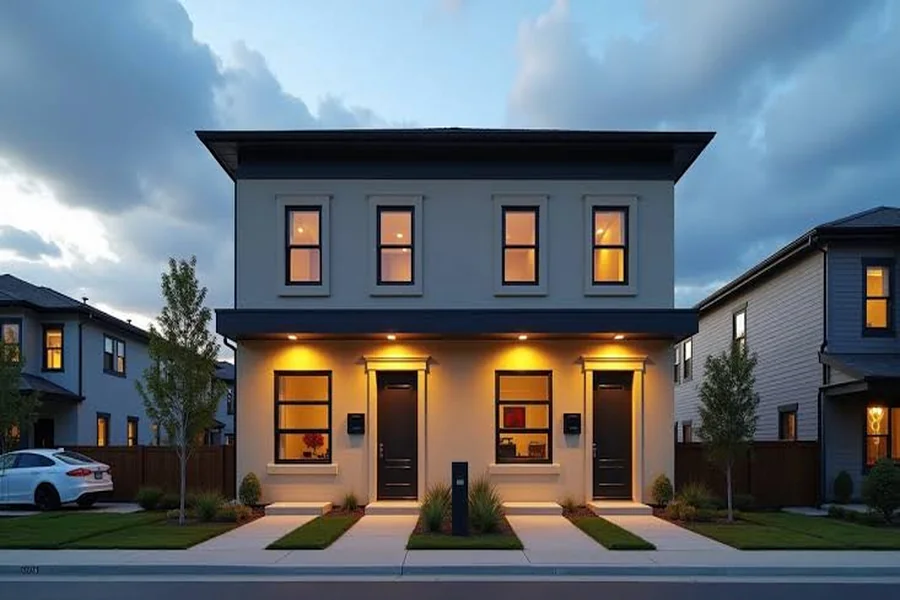
All four roofs went on in the same season. All four are dropping granules into the same gutters now. That symmetry looked like a bargain at closing and it reads like a bill today. Four 1,600 square foot rentals renting near $1,650 a month do not throw off anything close to four roofs’ worth of surplus in a single year, however tight the operating expenses are. Which is why the first move is not a quote at all, it is getting one roofing company in ft worth tx to walk all four addresses on the same afternoon instead of calling whoever answers the phone the day a tenant reports a stain. Sequenced replacement, ranked by condition and timed to lease turnovers, costs less cash and far less disruption than replacing four roofs together, and it is the difference between an emergency and a capital line.
Four Roofs Bought Together Fail Together
Buying four houses inside one calendar year usually means inheriting four roofs of one vintage. If the seller re-roofed before closing, you may also own the same shingle lot and the same crew’s flashing details on every one of them. Fort Worth sun and hail do not play favorites among identical roofs on the same street. Condition stops being an abstraction the moment an underwriter looks at it, and Carrier Management reported in May 2026 on Verisk research finding that roofs in visibly moderate to poor condition carry roughly 60 percent higher loss costs than roofs rated good or excellent. Job after job, the first honest signal is not a stain on a ceiling. It is granules in the downspout and a few lifted tabs on the south slope, showing up six months to two years ahead of any interior damage.
Replacing All Four at Once Breaks Cash Flow
Say a replacement on a 1,600 square foot rental runs somewhere in the low-to-mid teens of thousands, which is the range most owners here plan around. Four of those inside twelve months is a year of net rent, gone, plus whatever the vacancy costs while crews work. Batching also concentrates the risk in one price environment. Hail season pushes labor and material demand hard, and a single bad quarter sets the number for every roof you own if you sign all four inside it. Ask a roofing company in ft worth tx to quote four addresses off one inspection and the per-roof figure usually improves, but a discount on a bill you cannot fund is not a plan. Financing helps. So does splitting the work so each roof lands in a different tax year.
Staggering Works Only With a Condition Ranking
A stagger only works if the order is right. That means one inspection pass across all four roofs, documented, with remaining service life estimated per roof rather than per portfolio. The report should carry photos of every slope, decking notes, flashing and penetration condition, and a straight answer on which roof is closest to failing. If a roof has under three years left and its unit turns over this year, replace it now. If it has five or more, it goes to the back of the line and earns a re-inspection next spring instead. What usually turns up in practice is that the four are not equal at all: the one with the most afternoon exposure, or the shallowest pitch, runs two or three years ahead of its neighbors, and that single finding is what makes the sequence defensible to a lender or a partner.
A Three Year Sequence That Keeps Units Occupied
Here is what the calendar looks like once the ranking exists. In the first week after the inspection you should hold four condition grades and one recommended order of work, not four proposals to reconcile against each other. Within 90 days the worst roof comes off, ideally inside a turnover gap so nobody is living under the tear-off. By month six you learn something useful about your own numbers, namely whether the reserve you set aside per door covers a replacement or only a repair. Year two takes roof number two, with material pricing and one crew’s performance already tested on your own property. Year three closes the sequence, and the fourth roof still earns a fresh inspection before anyone touches it, because a roof that held three extra winters sometimes has a fourth in it.
Turnover Windows Are the Cheapest Time to Work
Vacancy is expensive. Vacancy you already planned for is nearly free. A tear-off over an occupied unit means noise from seven in the morning, nails in the driveway, and a tenant who now has a story about how you run the place. Do the same work in the ten days between a move-out and a move-in and it costs the same money with none of the goodwill damage. Leases signed in the same season help here, because they hand you a predictable window every summer instead of a scramble. A lease ending in July with a roof ranked second is your slot, and you book it in February, since crews in this market are spoken for by May.
Treating Roof Spend as a Capital Line
None of this requires a bigger budget. It requires the roof line to stop being a surprise and start being a number, set per door per month and funded whether or not anything is leaking. That same reserve is where water heaters and aging condensers belong, and the HVAC replacements are frankly harder to schedule than roofs, because they fail in the same August week every tenant needs them most. Back to roofs. Four identical roofs on four identical houses is not a crisis, it is a three-year line item with a known order, a known window inside each year, and one contractor who has already seen all four. Owners who write it down that way stop replacing roofs in emergencies and start replacing them on schedule, which is a duller way to run a portfolio, and dull is what protects the return.