

A truly immersive home entertainment experience depends as much on sound as it does on visuals. While high-definition screens capture attention, audio provides the depth and realism that make movies, music, and gaming feel alive. Home theatre speakers are designed to deliver this high-quality sound, transforming ordinary viewing and listening into an engaging sensory experience. By providing clarity, dynamic range, and balanced audio, these systems allow audiences to experience every detail, from subtle dialogue to powerful cinematic effects.
The Importance of High-Quality Home Theatre Speakers
Sound plays a critical role in shaping how games are experienced. From environmental ambience and background music to precise directional cues, audio informs player decisions and deepens immersion. High-quality sound allows gamers to react faster, identify subtle movements, and feel more connected to the game world with JBL home theater speakers.
Quality speakers also improve the overall soundstage, providing depth, directionality, and clarity. They distribute sound evenly across a room, preventing dead zones and ensuring a consistent listening experience. Investing in superior audio equipment enhances the cinematic experience and ensures long-term satisfaction with a home entertainment system.
Different Types of Home Theatre Speakers
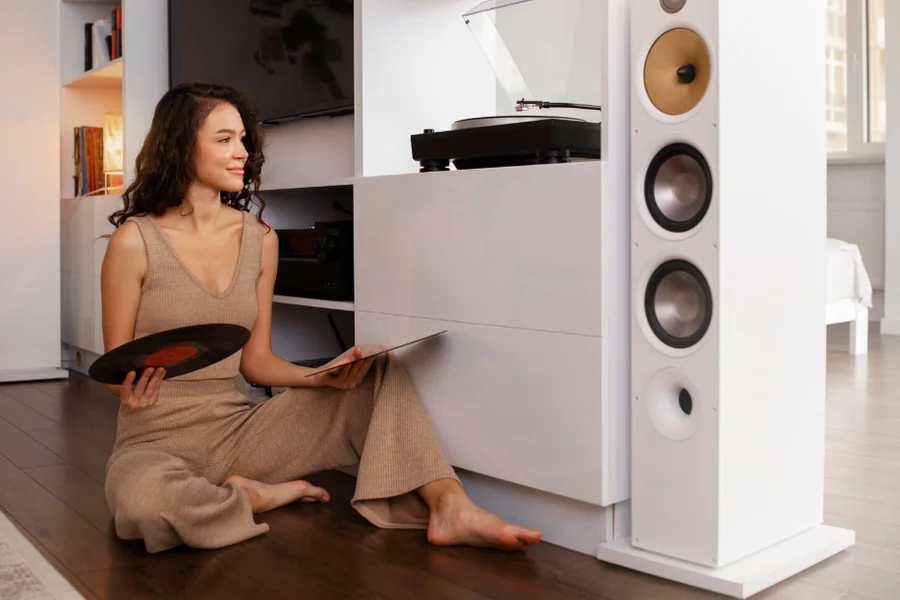
Home theatre systems often combine various speaker types to achieve a full, immersive sound profile. Floor-standing speakers, or tower speakers, provide deep bass and wide sound dispersion, making them ideal for larger rooms or primary audio sources. Their design allows for high power handling and extended frequency response, resulting in rich, dynamic sound.
Bookshelf speakers are smaller, versatile options that deliver clear and balanced audio. Suitable for smaller spaces or secondary channels, they can be placed on shelves, stands, or mounted discreetly without sacrificing quality.
Satellite speakers complement larger systems by providing focused audio for surround channels. Their compact design allows them to be placed strategically around a room, enhancing directional effects and expanding the perceived soundstage.
Soundbars offer a streamlined solution for those seeking simplicity without compromising performance. They combine multiple drivers in a single unit, delivering virtual surround sound for televisions while reducing setup complexity.
Subwoofers are responsible for low-frequency sounds, adding depth and impact to explosions, musical basslines, and atmospheric effects. By offloading deep bass from other speakers, subwoofers ensure cleaner, more accurate audio across the system.
Understanding Speaker Specifications
When evaluating home theatre speakers, understanding specifications is essential. Speaker power, measured in watts, indicates the maximum output a speaker can handle. Higher wattage generally allows for louder playback without distortion, though compatibility with amplifiers or receivers must be considered.
Sensitivity measures how efficiently a speaker converts power into sound. Higher sensitivity means a speaker can achieve greater volume with less power, which is especially relevant for larger rooms or low-powered systems.
Frequency response defines the range of sounds a speaker can reproduce, from low bass to high treble. A wider frequency range typically ensures more accurate and detailed audio, capturing both subtle effects and powerful low-end impacts.
Factors to Consider When Choosing Home Theatre Speakers
Room size and layout significantly influence speaker selection and placement. Larger spaces may require more powerful speakers or additional channels to ensure even sound distribution. Conversely, smaller rooms benefit from compact, well-placed speakers to avoid overwhelming the space.
Individual audio preferences should guide choices as well. Some listeners prioritise deep bass for action films and music, while others focus on clarity for dialogue-heavy content. A balanced system tailored to personal taste ensures the best listening experience.
Design and aesthetics also matter. Modern speakers often combine functionality with stylish finishes, allowing them to blend seamlessly with interior décor. Investing in speakers that look as good as they sound enhances satisfaction with the system.
Budget is an important consideration. While premium speakers often deliver superior performance and longevity, there are quality mid-range options that provide excellent sound without high cost. Striking a balance between price and performance ensures value for money and long-term enjoyment.
Tips for Installing and Positioning Home Theatre Speakers
Optimal speaker placement is essential for immersive sound. Front left and right speakers should flank the television, while the centre channel focuses on dialogue. Surround speakers placed to the sides or behind listeners enhance directional effects, and the subwoofer should be positioned to provide even bass distribution.
Calibration ensures the system performs at its best. Adjusting volume, crossover settings, and equalisation according to room acoustics helps achieve clarity and balance, creating a more engaging and natural audio experience.
Proper installation of each speaker type contributes to both sound quality and durability. Use stands or mounts for stability, ensure cables are secure, and follow manufacturer guidelines to optimise performance and safety.
Conclusion
Home theatre speakers are a vital component of any high-quality entertainment system. By delivering immersive sound, clarity, and dynamic range, they elevate movies, music, and gaming to new levels of enjoyment. Selecting the right combination of speakers, understanding specifications, and carefully positioning each component ensures that every detail is heard as intended. With attention to quality, personal preference, and room acoustics, home theatre speakers transform ordinary media into an extraordinary listening experience.