
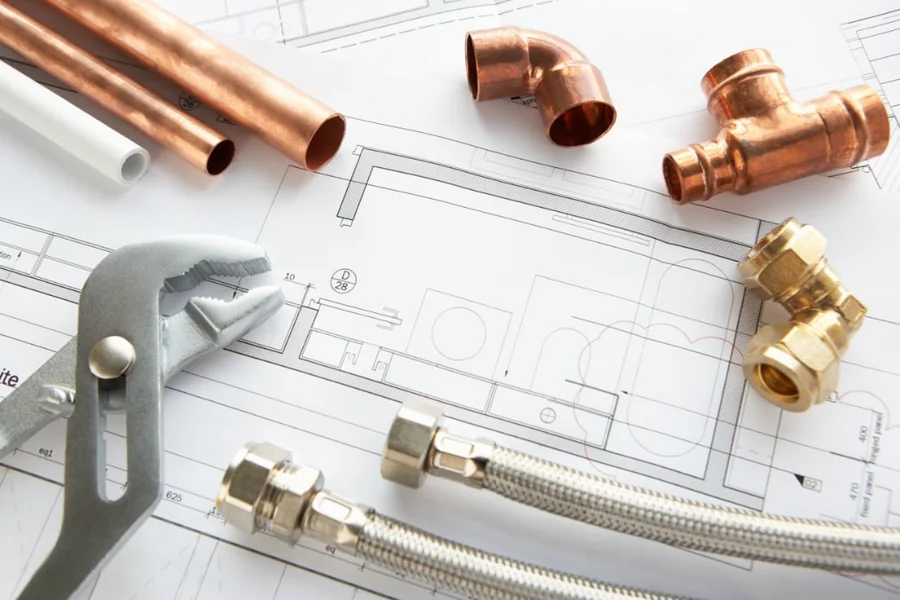
The kitchen table is not yours yet. There is a printed inspection report sitting on it, eleven plumbing observations highlighted in yellow, and a contingency deadline nine days out, which is about the point where buyers of 1970s starter homes in eastern Jackson County start searching for residential plumbers blue springs mo. Here is the argument, stated plainly: on a list that long, only two or three items will actually cost you money if you leave them alone for a year. Sorting which is which is the whole job.
Age is the first sorting tool you have. A 1978 house is old enough to carry galvanized steel supply lines, and a home inspection checklist published by AmeriSave in August 2026 notes that galvanized pipe in homes built before 1980 corrodes from the inside and restricts water flow, with replacement running $2,000 to $15,000 depending on the home. That range swallows a $1,500 first-year repair budget without slowing down. So the pipe material question gets answered before anything else on the page does.
Inspector Shorthand Translated Into Actual Repairs
Inspectors write in compressed phrases, and they are not trying to frighten anybody. Take “active drip at supply stop.” The stop is what plumbers call the little shutoff valve under the sink, meaning a $20 part with maybe forty minutes of labor around it. A line reading “slow drain, lavatory” is usually hair and soap rather than a broken pipe, and “evidence of past leak at trap” often means somebody already made the repair and the stain simply stayed behind. All three of those belong near the bottom of your list.
The entries that move up are the ones where waiting changes the price. A water heater with a 2009 date on its label is on borrowed time, and the gap between replacing it on a planned Tuesday and replacing it after it fails across a finished basement floor is a few thousand dollars of flooring and drywall. Sewer lateral notes earn the same treatment, because a line with roots in it does not improve on its own. On a 1978 house with $1,500 to work with, the allocation we see most often is one real repair plus a camera inspection, not eleven small fixes spread thin across the punch list.
Cost now against cost later is the only ranking that matters here.
Answers New Owners Keep Looking For
A few questions come up on nearly every walkthrough, and they tend to be the ones people are too polite to ask while the inspector is still in the crawlspace. None of them has one answer that fits every house, which is part of why the residential plumbers Blue Springs MO buyers hire will usually quote after reading the report rather than over the phone. The answers below assume an older, modest home instead of a new build.
How Much Should I Budget For Plumbing In Year One?
For a starter home bought in the low $200,000s, $1,500 is a reasonable working number for the first year, and most of it should stay uncommitted until the diagnostic work is finished. Spend $200 to $400 of that on a sewer camera run if the lot has mature trees on it. Whatever the camera does not find rolls straight into the water heater fund.
Can I Wait On A Water Heater That Still Works?
Yes, and plenty of owners do. Set a trigger instead of a date: rusty water at the hot tap or any moisture on the drain pan floor means the decision has been made for you. If the heater sits in a finished basement rather than a garage, move it up the list, because the failure costs far more than the appliance.
Does A Slow Drain Mean The Sewer Line Is Bad?
Usually not. One slow fixture is almost always local to that fixture and clears with a proper cleaning rather than a repair. When every drain in the house slows at once, or a floor drain gurgles up while the washing machine empties, that pattern points at the main line and deserves a camera before you spend money anywhere else.
Order The List Before The Budget Runs Out
Take the eleven items and sort them into two piles: fix before you move in, and everything else. The first pile is short, often a single entry, sometimes two. Older neighborhoods around here do vary block by block, and some streets had their water mains replaced within the past decade while others still run the original line, which affects pressure complaints more than anything inside the house does. That is a municipal question though, not an inspection one, so back to the report: pressure notes stay in the second pile unless a fixture is genuinely starved.
A walkthrough with somebody who reads the report line by line turns a page of shorthand into an ordered plan with numbers attached, and that hour costs less than guessing wrong once. Ask for the estimate in writing, with the urgent items priced separately from the rest. Then spend the first-year budget in the order you wrote down, not in the order the inspector happened to type it.