
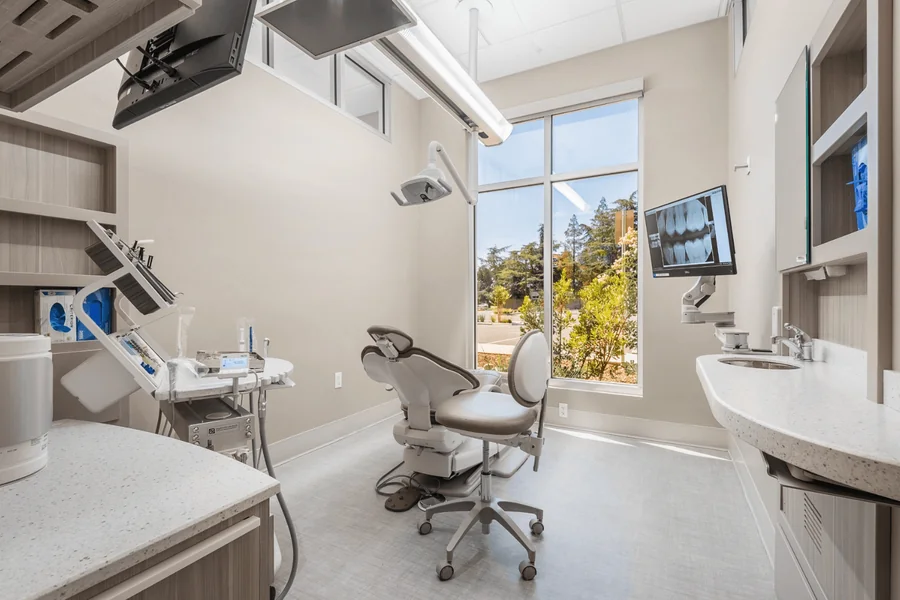
The quote said the practice needed a bigger rooftop unit, and the number on it had five digits. That quote was solving the wrong problem. When the owner of a six-operatory dental suite in a 1980s strip center outside Philadelphia finally called a contractor who does heating air conditioning philadelphia pa work on commercial buildings rather than houses, the diagnosis came back as airflow and heat load, not capacity. Rooms that bake while patients in the waiting area keep their coats zipped are rarely short on tonnage. They are short on cool air where the heat is actually being made. The argument here is simple: rebalancing an existing system usually costs a small fraction of replacing it, and it fixes the complaint a replacement would leave in place.
A Bigger Unit Rarely Fixes Uneven Rooms
Oversized cooling equipment satisfies a thermostat quickly, then shuts off. Those short cycles pull less moisture out of the air, so a suite can read 72 degrees and still feel clammy in the rooms holding the most people. Inadequate air handling is hardly a niche problem, either; the Associated Press reported in July 2026 that roughly 40,000 U.S. schools lack adequate HVAC systems, which is the same underlying failure playing out at a scale nobody can ignore. A bigger box still pushes air through the same undersized duct branch, and that branch is what decides whether operatory four is bearable at two in the afternoon.
Common cooling claims against typical findings. Illustrative example scenario for a six-operatory suite, not measured data.
| The Common Claim | What A Technician Usually Finds | Practical Cost Difference |
| The unit is too small for the square footage | Supply registers serving the operatories are undersized or partly closed | Balancing and register work in the hundreds, not a five-figure changeout |
| The building simply runs hot in summer | Return air is being pulled from the coolest corner of the suite | Relocating a return, well under the price of new equipment |
| The thermostat must be broken | The thermostat works fine and is reading a room nobody complains about | One relocated sensor plus a service call |
| Nothing can be done in an older strip center | The original design never counted sterilizer, compressor and chairside heat | A load recalculation, usually about a day of labor |
Equipment Heat Loads Sit Outside The Original Design
A 1980s strip center was drawn for retail or general office use, with a load calculation that assumed people, overhead lights and a copier. A dental operatory adds a compressor line, curing lights, a sensor, a chairside monitor and often three warm bodies inside roughly 90 square feet. Sterilization rooms are worse. Job after job, what usually turns up is a suite carrying the same duct layout it had in 1987 and close to double the internal heat that layout was drawn to handle. The autoclave room also tends to reveal a venting issue that has nothing to do with cooling, which is a plumbing and exhaust conversation for a different day. Back to the air: no amount of extra tonnage rewrites where the ducts already run.
Thermostat Placement Decides Who Feels Comfortable
One sensor cannot speak for six rooms with six different loads. A practice manager in Bucks County logged temperatures at the chair for two weeks and found her operatories sitting 6 to 8 degrees above the hallway thermostat every afternoon. The system was doing exactly what it had been told, and it had been told by the wrong room. Moving that sensor, adding a second zone or cutting a return into the hottest operatory changes the outcome without changing the equipment. The utility bill keeps its own score, and it tends to fall once the system stops chasing a hallway.
Compare The Common Claims Against The Bills
Summer bills around $1,900 a month made the replacement pitch sound reasonable at that suite, since new equipment always promises efficiency. Run the arithmetic first. Say balancing, one relocated sensor and a return duct in the hottest room come to $2,400, while the changeout was quoted at $16,000; if the balance work trims 12 percent off a $1,900 summer month, that is roughly $228 back each month, and the smaller job has paid for itself inside a single cooling season. A new unit dropped onto the same bad duct branch will short cycle the way the old one did, so what a replacement actually saves still depends on the duct work. Ask for the static pressure reading and the load calculation, then compare the two proposals on paper.
Questions Practice Owners Keep Asking About Airflow
These come up on nearly every first visit to a practice with uneven rooms. None of the answers require new equipment. All of them require someone willing to measure.
Why does the waiting room stay cold while the operatories bake?
The thermostat usually sits in or near the waiting area, so that space gets what it asks for and the back of the suite gets whatever is left over. Air follows the path of least resistance, and a short duct run to the lobby beats a long branch to the rear operatories every time. Balancing dampers and a properly placed return change how that air gets split.
Can this be fixed without shutting the practice down for a week?
Most balancing and sensor work takes a few hours, and a competent crew schedules it around patient hours or on a Saturday. Duct modifications above a drop ceiling are messier and may cost you the use of one operatory for a day. Ask for the sequence in writing before the first fastener comes out.
Balanced Air Costs Less Than Replacement
Start with a load calculation and a static pressure reading, not a proposal. Any firm selling heating air conditioning philadelphia pa services into a dental or medical suite should hand you both numbers before it names a piece of equipment, and should explain plainly what changed if a second visit tells a different story. Replacement is sometimes the honest answer, usually once a unit is past 18 years and losing refrigerant every season. It is simply the first answer far more often than it deserves to be. Fix the distribution, and the room where you actually work gets comfortable at a price that does not need financing.