
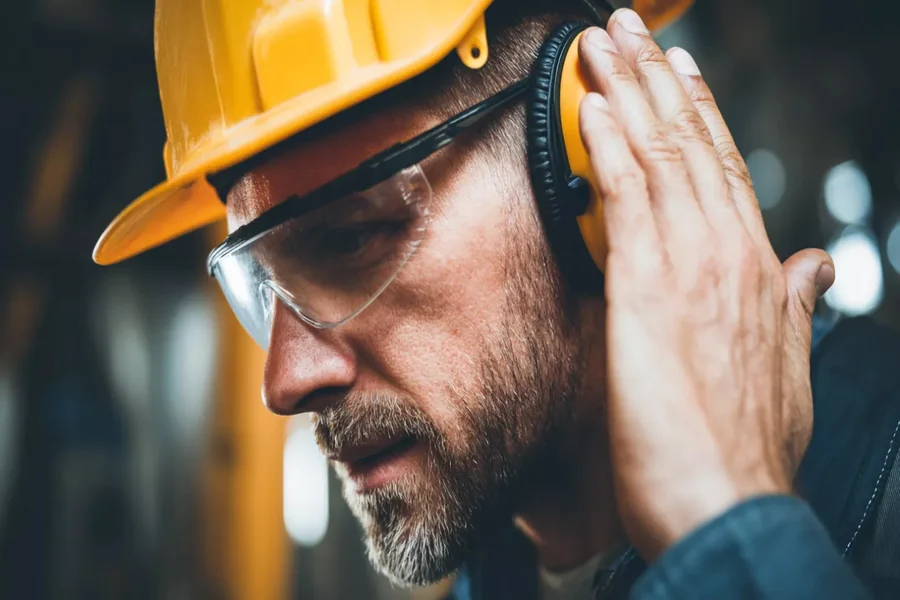
Loud noise is one of those workplace hazards that people tend to shrug off. Nobody clutches their ear and calls 911 after a shift on a factory floor. The damage builds slowly, year after year, until one day a person notices they are asking family members to repeat themselves or turning the television up louder than they used to. By then, the hearing loss is often permanent.
Many workers do not realize that this kind of damage can qualify for benefits. If years of noise on the job have affected your hearing, it may be worth learning how workers’ compensation for hearing damage works before assuming there is nothing to be done about it.
Noise Damage Builds Quietly
Most workplace injuries have a clear moment attached to them. A worker falls off a ladder, or a machine catches a hand, and there is a specific date and time to point to. Hearing loss rarely works that way.
Exposure to loud machinery, engines, power tools, or industrial equipment can wear down hearing over months or years without a single dramatic event. A person might work in a noisy plant for a decade before the loss becomes noticeable enough to mention to a doctor. That slow timeline is exactly why these claims often get treated differently than a broken bone or a cut.
Why These Claims Get Classified Differently
Because hearing loss develops gradually, it is usually handled as an occupational disease rather than a single accident. That distinction matters. Occupational disease claims often come with their own filing rules, evidence requirements, and deadlines that do not match the ones used for sudden injuries.
This can catch workers off guard. Someone might assume they have plenty of time to file simply because the condition took years to develop, only to learn that the clock started ticking from a specific point, such as the date a doctor confirmed the diagnosis or the last day of exposure. Missing that window can mean losing the right to benefits altogether, even when the hearing loss is clearly tied to the job.
What Insurance Companies Tend to Argue
Insurers do not usually deny that a person has hearing loss. What they dispute is the cause. A common argument is that the damage comes from normal aging rather than the workplace. Another is that a hobby, like hunting, concerts, or loud recreational equipment, is the real source of the problem.
These arguments can be hard to fight without solid documentation. An insurance company may also send a worker to an independent medical examination with a doctor of its choosing, and that doctor’s opinion does not always match what the worker’s own physician found. When that happens, the case can turn into a dispute over which medical opinion should carry more weight.
Building a Case That Holds Up
A strong hearing loss claim usually rests on connecting three things: the type of work performed, the noise levels involved, and the medical diagnosis. That connection is not always obvious on paper, especially for someone who worked several different jobs over the years or whose employer never conducted formal noise testing.
Helpful evidence can include the following.
- Hearing tests and audiology reports showing the type and degree of hearing loss
- A detailed work history describing the machinery, tools, or equipment used
- Statements from coworkers who worked in the same noisy environment
- Company safety records or documentation about hearing protection policies
- Records showing whether protective equipment was provided or required
According to the National Institute for Occupational Safety and Health, roughly 27 million workers are exposed to hazardous noise on the job each year, and occupational hearing loss ranks among the most common work-related conditions in the country. That kind of independent data can help support a claim when an insurer tries to frame the condition as purely a result of age.
What Benefits Might Cover
The financial side of a hearing loss claim usually focuses on a few areas. Medical treatment is one, including hearing aids, testing, and any follow-up care a doctor recommends. Permanent impairment benefits are another, since hearing loss that does not fully recover is often rated on a percentage scale that affects the value of a settlement.
If a related procedure, such as surgery for a cochlear implant, temporarily keeps someone out of work, lost wage benefits may also apply during that recovery period. None of this is automatic. Insurers frequently push back on the extent of the impairment or argue that requested treatment, like a particular hearing aid, is not medically necessary.
Steps Workers Can Take Early
Waiting rarely helps in these cases. The longer someone puts off seeing a doctor about hearing changes, the more room an insurer has to argue that something else caused the damage. Getting evaluated by an audiologist or ear, nose, and throat specialist creates a medical record that ties the timeline together.
It also helps to write down details about past jobs while they are still fresh, including the kind of equipment used, how loud the environment was, and whether hearing protection was available. Coworkers who witnessed the same conditions can be difficult to track down years later, so gathering names and contact information sooner rather than later tends to pay off.
Frequently Asked Questions
Does workers’ compensation cover hearing loss even if it developed over many years?
Yes, in many cases. Because hearing loss is usually treated as an occupational disease, the claim focuses on connecting the condition to workplace noise exposure over time rather than a single accident.
Can a claim still be filed after leaving the job where the exposure happened?
Often, yes. Hearing loss may not become noticeable until after someone has retired or moved to a different job. Deadlines still apply, though, so it is worth checking the specific filing window rather than assuming there is no rush.
What if the employer never tested noise levels?
A lack of formal testing does not automatically end a claim. Coworker statements, job descriptions, and general knowledge about the type of equipment used can still help establish that the environment was loud enough to cause damage.
Is tinnitus covered the same way as hearing loss?
Tinnitus, the perception of ringing or buzzing without an outside sound source, can sometimes be connected to the same noise exposure and may be included in a claim alongside hearing loss.
Don’t Wait to Get Your Hearing Checked
Hearing loss caused by years on a loud job site is a real injury, even though it rarely shows up all at once. The gradual nature of the condition is exactly what makes it easy for insurance companies to argue about, which is why documentation and timing matter so much. Workers who notice changes in their hearing should not assume it is simply a normal part of getting older, especially if their job involved regular exposure to loud machinery or equipment. Getting a medical evaluation and understanding the filing deadlines early can make a real difference in whether a claim succeeds.